The question that stayed with me


One of my professors at Adam Mickiewicz University, Professor Zofia Staszczak, had a curious habit. She wanted to know not only what we read or what we thought, but how we worked. Did we draft papers by hand or on a typewriter? Did we write in the morning or late at night? Tea? Coffee? A glass of wine? How did we organize our notes? Did we write in a notebook or on loose sheets of paper?
At the time, these questions seemed charmingly eccentric. Looking back, I can no longer remember exactly when Professor Staszczak first asked these questions. They surfaced repeatedly—in lectures, conversations, and later during visits to her home—until, almost without my noticing, they quietly became part of my own warsztat.
More Than Mechanics

The word she often used was warsztat. Sadly, warsztat has no satisfying English equivalent. Possible translations—workshop, craft, toolkit, methodology, way of working, or scholarly practice—all fall short. None captures what Professor Staszczak meant.
For Professor Staszczak, warsztat did not simply refer to tools such as note-taking, writing habits, or office organization. Those were only the visible expressions of something much deeper. Warsztat encompassed habits, discipline, intellectual honesty, respect for sources, curiosity, bibliography, and practical ways of working. It was about how one lives scholarship, not merely how one conducts research. To me, she always seemed to pronounce Warsztat as though it deserved a capital W.
The Tools Change
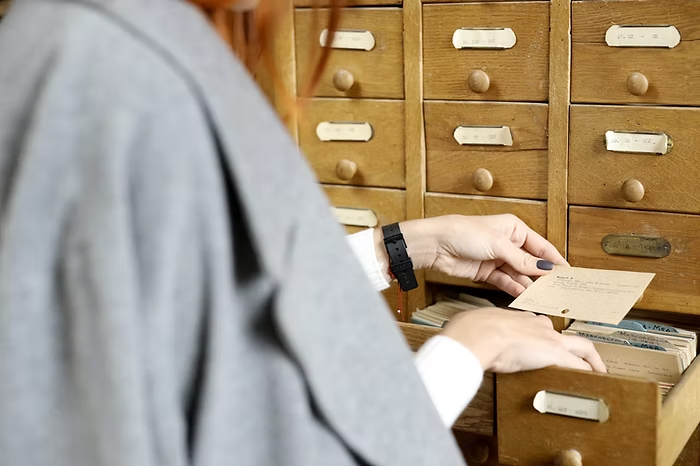
Computers, digital archives, and cloud storage came much later. Today, I use AI to perform time-consuming tasks such as formatting bibliographies, but also as a sounding board for developing ideas.
I mention these changes not because I feel nostalgic for the past. Quite the contrary—I do not miss writing longhand or searching library card catalogs. Rather, they remind me that the tools of scholarship continue to evolve. None of this would have surprised Professor Staszczak. She was never really interested in the tools themselves, but in how they shaped our habits of thinking.
The Craft Remains

Technology changes—and it will continue to change—but good scholarship still depends on careful observation, attentive listening, revision, curiosity, generosity, respect for evidence, and intellectual integrity. These are not relics of an earlier generation. They remain the foundation of thoughtful scholarship, regardless of the tools we use.
Her Questions Still Echo
As I mentor doctoral students and lead research teams, I realize that Professor Staszczak's questions continue to guide my own practice. Sometimes, after finishing a manuscript or reading a student's work, I find myself wondering what she would say. I still hear one of her favorite expressions: Tak trzymać!
How Do You Think?
Looking back, I realize that Professor Staszczak's questions were never really about tea, notebooks, fountain pens, or typewriters. She wasn't collecting amusing details about our writing habits. She was asking a much deeper question: How do you think?
We become scholars not only through methods courses or by accumulating publications, but through the habits, values, and examples of remarkable teachers. Their questions gradually become our own.
Only much later did I understand another of my professors, Józef Burszta, who often reminded us:
"Antropologiem się nie bywa, antropologiem się jest."
It took me many years to understand what he meant.


Comments